
Executive Summary & Key Takeaways: As cumulative BYD New Energy Vehicle production passes 13 million units, BYD's Central Research Institute shared a technical preview of upcoming distributed drive and steer-by-wire innovations:
1. Platform Engineering & Core Hardware Breakdown
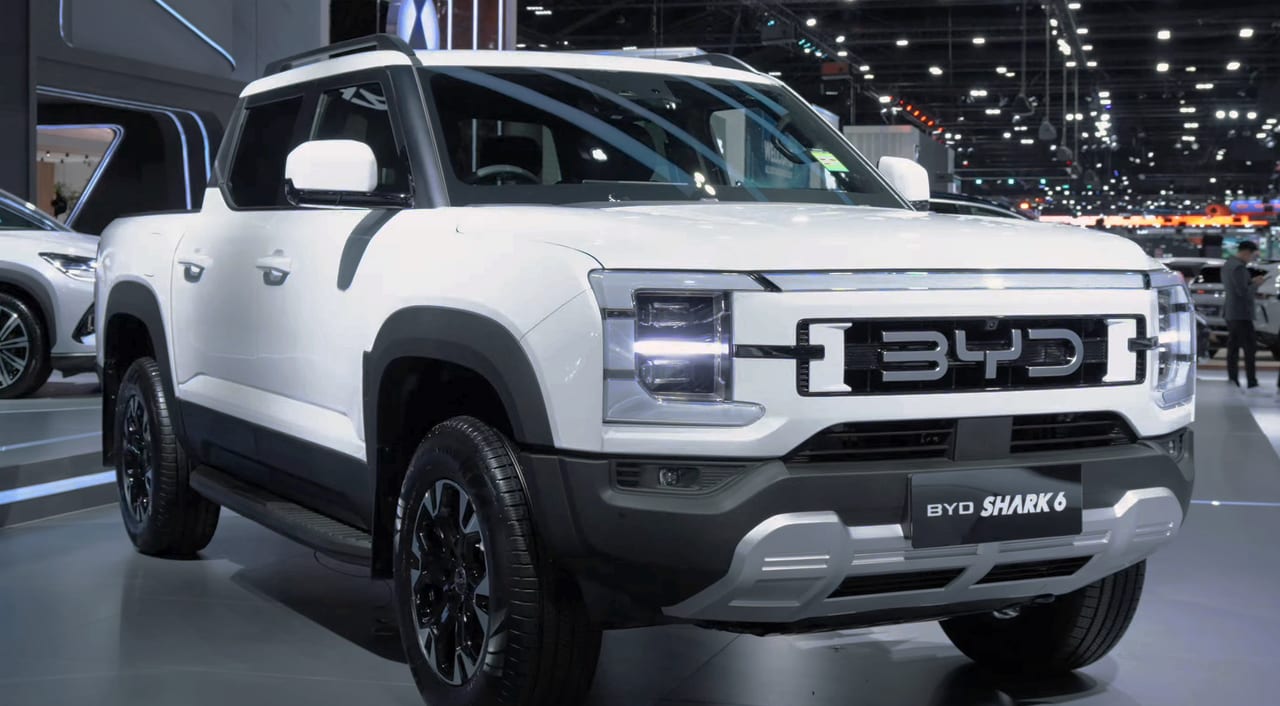
Figure 1: BYD Shark 6 DMO Plug-In Hybrid Ute — longitudinal 1.5T hybrid generator paired with dual electric axles and independent coil suspension.
- Millisecond Torque Vectoring with zero mechanical differential lag, allowing independent slip control at every corner on ice, wet bitumen, or gravel.
- 12V/48V Solid-State Low-Voltage Bus Architecture reducing wiring harness weight by 35% across future platforms.
2. Technical Specifications & Architecture Comparison
Figure 2: Chassis & Utility Detail:CTC (Cell-to-Chassis) structural Blade Battery integration and 6.6 kW V2L tub power architecture.
Below is the complete engineering and specification breakdown across the export powertrain and chassis architecture:
| Technical Parameter | Official BYD Specification & Benchmark |
|---|---|
| Platform Architecture | DMO Super Hybrid Body-on-Frame (CTC Ladder Chassis) |
| Combined System Output | 321 kW (430 hp) / 650 Nm Dual-Motor AWD |
| Battery Chemistry & Capacity | 29.58 kWh LFP Blade Battery + 6.6 kW V2L Discharge |
| Suspension Layout | Front & Rear Independent Double-Wishbone Coil Springs |
3. Real-World Ownership Impact, Safety & Regional Availability
From a long-term ownership perspective, the combination of Cobalt-Free LFP Blade Battery chemistry, Cell-to-Body (CTB) / Cell-to-Chassis (CTC) structural rigidity, and over-the-air (DiLink OTA) software refinement ensures strong residual values and low scheduled maintenance costs across both right-hand-drive (ANZ/UK) and European markets.