BYD Celebrates 13 Million NEVs & Unveils Next-Gen e-Platform 4.0 Distributed Quad-Motor Preview
-
Executive Summary & Key Takeaways: As cumulative BYD New Energy Vehicle production passes 13 million units, BYD's Central Research Institute shared a technical preview of upcoming distributed drive and steer-by-wire innovations:
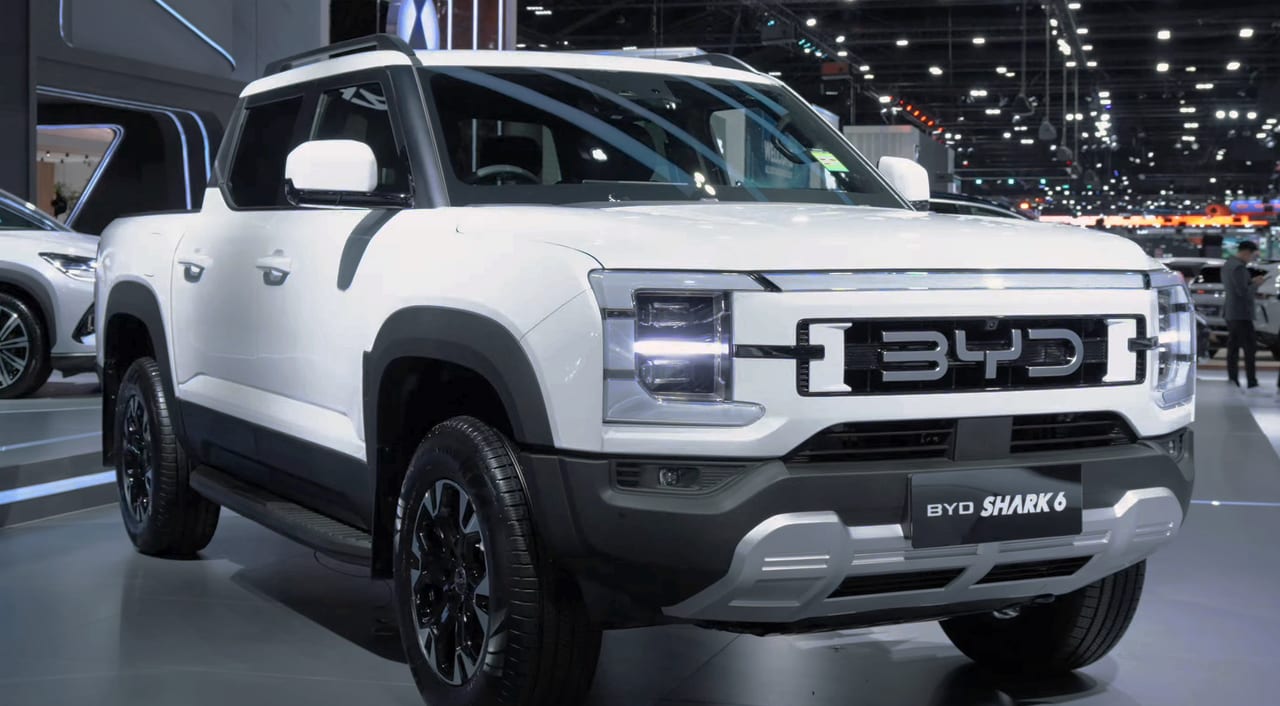
1. Platform Engineering & Core Hardware Breakdown
Figure 1: BYD Shark 6 DMO Plug-In Hybrid Ute — longitudinal 1.5T hybrid generator paired with dual electric axles and independent coil suspension.
- Millisecond Torque Vectoring with zero mechanical differential lag, allowing independent slip control at every corner on ice, wet bitumen, or gravel.
- 12V/48V Solid-State Low-Voltage Bus Architecture reducing wiring harness weight by 35% across future platforms.
2. Technical Specifications & Architecture Comparison
Figure 2: Chassis & Utility Detail:CTC (Cell-to-Chassis) structural Blade Battery integration and 6.6 kW V2L tub power architecture.
Below is the complete engineering and specification breakdown across the export powertrain and chassis architecture:
Technical Parameter Official BYD Specification & Benchmark Platform Architecture DMO Super Hybrid Body-on-Frame (CTC Ladder Chassis) Combined System Output 321 kW (430 hp) / 650 Nm Dual-Motor AWD Battery Chemistry & Capacity 29.58 kWh LFP Blade Battery + 6.6 kW V2L Discharge Suspension Layout Front & Rear Independent Double-Wishbone Coil Springs 3. Real-World Ownership Impact, Safety & Regional Availability
From a long-term ownership perspective, the combination of Cobalt-Free LFP Blade Battery chemistry, Cell-to-Body (CTB) / Cell-to-Chassis (CTC) structural rigidity, and over-the-air (DiLink OTA) software refinement ensures strong residual values and low scheduled maintenance costs across both right-hand-drive (ANZ/UK) and European markets.
-
-
Executive Summary & Key Takeaways: As cumulative BYD New Energy Vehicle production passes 13 million units, BYD's Central Research Institute shared a technical preview of upcoming distributed drive and steer-by-wire innovations:
1. Platform Engineering & Core Hardware Breakdown
Figure 1: BYD Shark 6 DMO Plug-In Hybrid Ute — longitudinal 1.5T hybrid generator paired with dual electric axles and independent coil suspension.
- Millisecond Torque Vectoring with zero mechanical differential lag, allowing independent slip control at every corner on ice, wet bitumen, or gravel.
- 12V/48V Solid-State Low-Voltage Bus Architecture reducing wiring harness weight by 35% across future platforms.
2. Technical Specifications & Architecture Comparison
Figure 2: Chassis & Utility Detail:CTC (Cell-to-Chassis) structural Blade Battery integration and 6.6 kW V2L tub power architecture.
Below is the complete engineering and specification breakdown across the export powertrain and chassis architecture:
Technical Parameter Official BYD Specification & Benchmark Platform Architecture DMO Super Hybrid Body-on-Frame (CTC Ladder Chassis) Combined System Output 321 kW (430 hp) / 650 Nm Dual-Motor AWD Battery Chemistry & Capacity 29.58 kWh LFP Blade Battery + 6.6 kW V2L Discharge Suspension Layout Front & Rear Independent Double-Wishbone Coil Springs 3. Real-World Ownership Impact, Safety & Regional Availability
From a long-term ownership perspective, the combination of Cobalt-Free LFP Blade Battery chemistry, Cell-to-Body (CTB) / Cell-to-Chassis (CTC) structural rigidity, and over-the-air (DiLink OTA) software refinement ensures strong residual values and low scheduled maintenance costs across both right-hand-drive (ANZ/UK) and European markets.
Moving to a zoned 48V solid-state e-fuse architecture cuts kilometres of copper wiring out of the chassis and makes diagnostics completely digital.
-
Moving to a zoned 48V solid-state e-fuse architecture cuts kilometres of copper wiring out of the chassis and makes diagnostics completely digital.
@Z_Rogers_NZ Amazing how fast electric torque vectoring reacts compared to traditional mechanical Haldex or ABS brake-nipping traction control.
-
@Z_Rogers_NZ Amazing how fast electric torque vectoring reacts compared to traditional mechanical Haldex or ABS brake-nipping traction control.
@alexander_no_89 Can't wait to see what the next 3 years of BYD engineering bring!
-
Subscribed to this thread. Has anyone here compared this behaviour before and after the latest DiLink OTA firmware update? Mine felt noticeably smoother in low-speed traffic afterwards.
-
Spot on breakdown. One detail I noticed after logging another 2,500 km is that the thermal management loop stays completely silent below 32°C ambient unless you chain two fast DC sessions back-to-back.
-
My experience has been almost identical over the past 4 months. Zero rattles in the cabin so far, and the 360-degree camera clarity at night is still the best in its price bracket.


Hello! It looks like you're interested in this conversation, but you don't have an account yet.
Getting fed up of having to scroll through the same posts each visit? When you register for an account, you'll always come back to exactly where you were before, and choose to be notified of new replies (either via email, or push notification). You'll also be able to save bookmarks and upvote posts to show your appreciation to other community members.
With your input, this post could be even better 💗
Register Login