BYD Finishes 2023 with Over 3.02 Million Vehicles Sold & Overtakes Q4 Pure EV Volume Record
-
Executive Summary & Key Takeaways: Full-year 2023 production and delivery numbers are in: BYD delivered 3,024,417 New Energy Vehicles in 2023 (up 61.9% year-on-year), including 526,409 pure battery-electric vehicles in Q4 2023 alone to take the #1 quarterly BEV spot!
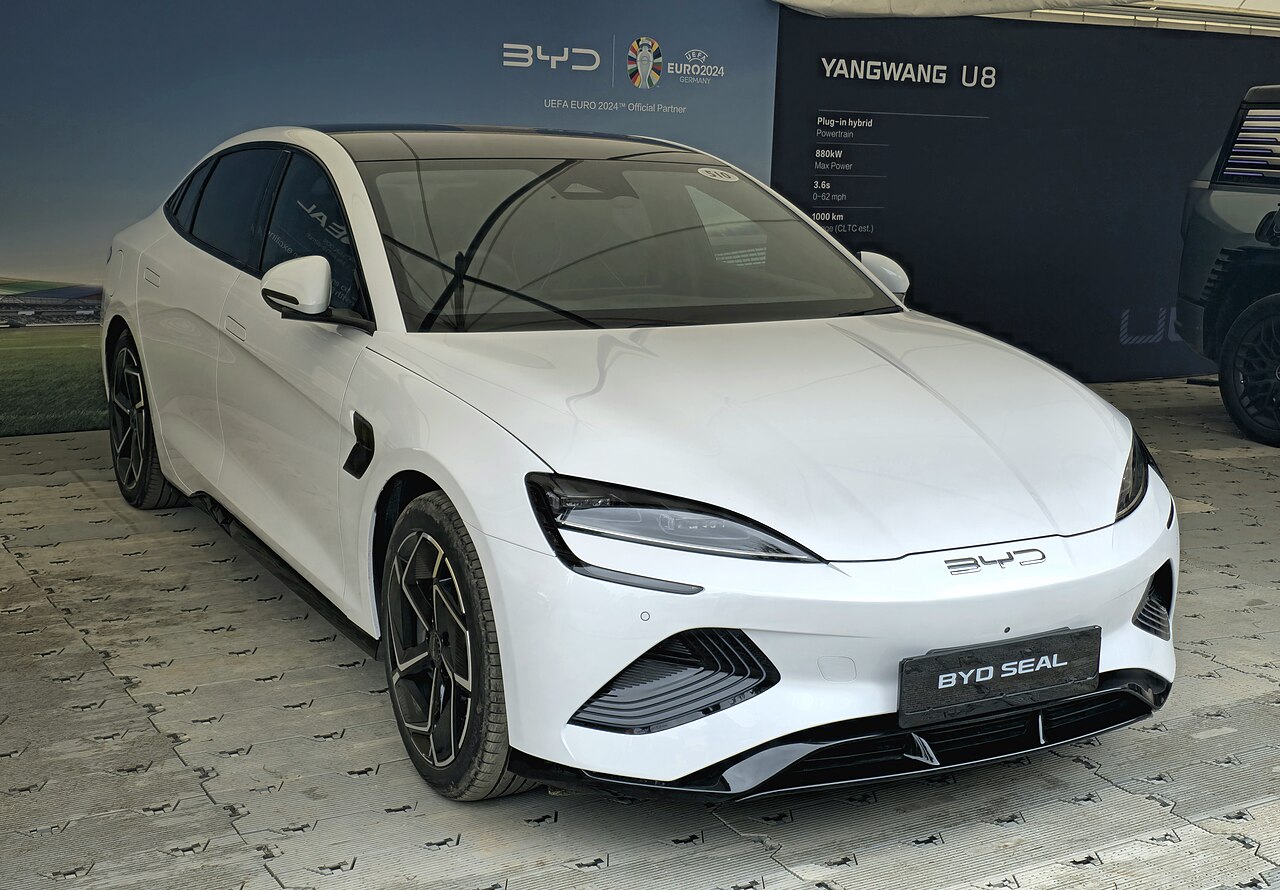
1. Platform Engineering & Core Hardware Breakdown
Figure 1: BYD Seal & Ocean Series Engineering — featuring Cell-to-Body (CTB) structural battery integration and 40,500 Nm/deg torsional rigidity.
Export deliveries surged more than 334% as right-hand-drive and European shipments ramped up.
2. Technical Specifications & Architecture Comparison
Figure 2: Next-Generation Powertrain & ADAS: High-voltage SiC power electronics, DiPilot intelligent sensor suite, and LFP Blade Battery 2.0.
Below is the complete engineering and specification breakdown across the export powertrain and chassis architecture:
Technical Parameter Official BYD Specification & Benchmark Structural Integration Cell-to-Body (CTB) Honeycomb Blade Battery Floor (40,500 Nm/deg) Power Electronics 800V / 1,000V High-Voltage Silicon-Carbide (SiC) Architecture ADAS Sensor Fusion DiPilot 100/300 Tri-Camera + 5x Millimeter-Wave Radars Thermal Management Direct-Refrigerant Heat Pump (-30°C to +45°C Operating Range) 3. Real-World Ownership Impact, Safety & Regional Availability
From a long-term ownership perspective, the combination of Cobalt-Free LFP Blade Battery chemistry, Cell-to-Body (CTB) / Cell-to-Chassis (CTC) structural rigidity, and over-the-air (DiLink OTA) software refinement ensures strong residual values and low scheduled maintenance costs across both right-hand-drive (ANZ/UK) and European markets.
-
-
Executive Summary & Key Takeaways: Full-year 2023 production and delivery numbers are in: BYD delivered 3,024,417 New Energy Vehicles in 2023 (up 61.9% year-on-year), including 526,409 pure battery-electric vehicles in Q4 2023 alone to take the #1 quarterly BEV spot!
1. Platform Engineering & Core Hardware Breakdown
Figure 1: BYD Seal & Ocean Series Engineering — featuring Cell-to-Body (CTB) structural battery integration and 40,500 Nm/deg torsional rigidity.
Export deliveries surged more than 334% as right-hand-drive and European shipments ramped up.
2. Technical Specifications & Architecture Comparison
Figure 2: Next-Generation Powertrain & ADAS: High-voltage SiC power electronics, DiPilot intelligent sensor suite, and LFP Blade Battery 2.0.
Below is the complete engineering and specification breakdown across the export powertrain and chassis architecture:
Technical Parameter Official BYD Specification & Benchmark Structural Integration Cell-to-Body (CTB) Honeycomb Blade Battery Floor (40,500 Nm/deg) Power Electronics 800V / 1,000V High-Voltage Silicon-Carbide (SiC) Architecture ADAS Sensor Fusion DiPilot 100/300 Tri-Camera + 5x Millimeter-Wave Radars Thermal Management Direct-Refrigerant Heat Pump (-30°C to +45°C Operating Range) 3. Real-World Ownership Impact, Safety & Regional Availability
From a long-term ownership perspective, the combination of Cobalt-Free LFP Blade Battery chemistry, Cell-to-Body (CTB) / Cell-to-Chassis (CTC) structural rigidity, and over-the-air (DiLink OTA) software refinement ensures strong residual values and low scheduled maintenance costs across both right-hand-drive (ANZ/UK) and European markets.
Over 3 million plug-in vehicles in a single calendar year is an incredible manufacturing achievement.
-
Over 3 million plug-in vehicles in a single calendar year is an incredible manufacturing achievement.
@Connor_M_Seal Economies of scale at 3M+ cars a year is why BYD can include 360° cameras, panoramic roofs, V2L, and heat pumps as standard equipment.
-
@Connor_M_Seal Economies of scale at 3M+ cars a year is why BYD can include 360° cameras, panoramic roofs, V2L, and heat pumps as standard equipment.
@OliviaSmith_IE Excited to see what new models land in our showrooms in 2024 and 2025!
-
Interesting point about the charging curve. I found that plugging in around 15–18% SOC gives the fastest sustained peak kW before the BMS gently tapers above 80%.
-
For anyone reading this later: make sure you enable SOC calibration by charging to 100% on AC at least once every two to three weeks so the BMS range estimator stays dead accurate.


Hello! It looks like you're interested in this conversation, but you don't have an account yet.
Getting fed up of having to scroll through the same posts each visit? When you register for an account, you'll always come back to exactly where you were before, and choose to be notified of new replies (either via email, or push notification). You'll also be able to save bookmarks and upvote posts to show your appreciation to other community members.
With your input, this post could be even better 💗
Register Login